

 Fieldmasters
Admin
Fieldmasters
Admin
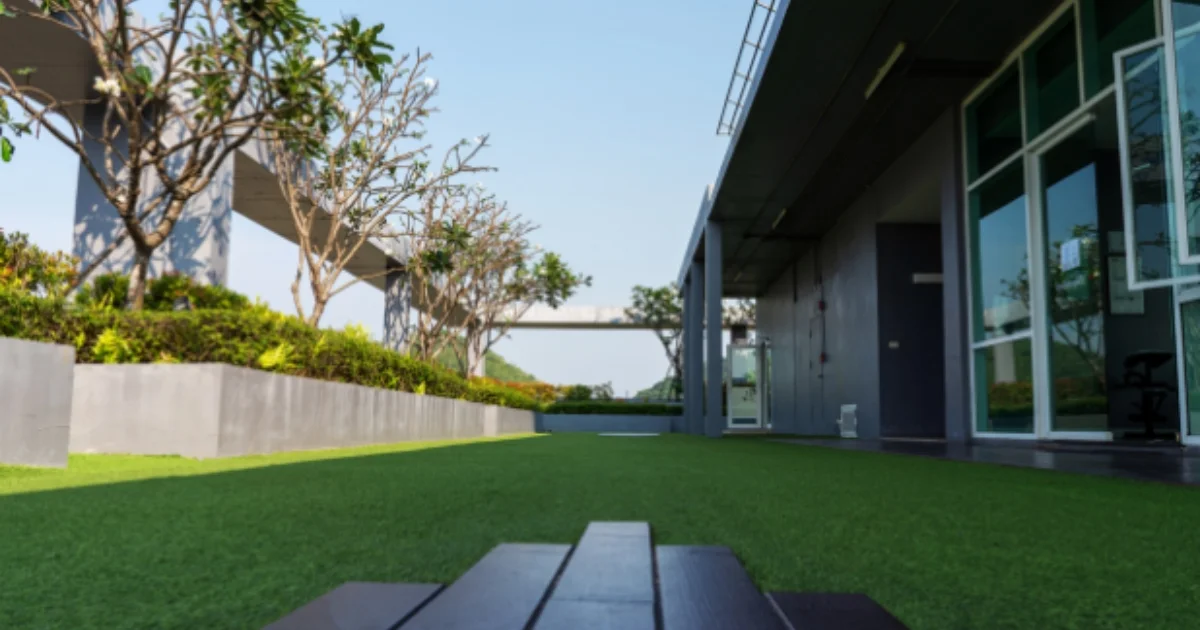
We won’t deny it. There’s no replacing “real” grass for many home and condo owners. This article isn’t about us railing against natural lawns. Everything has its place in the world, after all.
However, you’re reading the article because you’ve reached (or are close to reaching) a breaking point with your natural lawn.
We’re here to tell you there’s a way out.
You don’t have to be stuck with surrounding terrain you don’t want on your property anymore.
As you examine your home’s perimeter (or the grass on a condo balcony), the idea of replacing it can seem daunting.
Fortunately, thanks to the latest and greatest synthetic grass technology (e.g., high-drainage options that are non-flammable and lead-free), freedom from your lawn—and its pitfalls—is a phone call away.
You can remove your natural grass and say goodbye to the giant pain-in-the-rear-end it often entails with minimal effort, replacing it with synthetic grass that maintains the aesthetic integrity of your landscape design.
Still, we’d never suggest jumping into this type of transition headfirst without having all the information to back up your decision.
Read on for a cost-benefit analysis of investing in synthetic grass and saying goodbye to your natural lawn.
Fieldmasters Synthetic Grass, a leader in the synthetic turf industry since 1991, has been installing and maintaining a variety of synthetic turf systems for years. Call us or send an email today to learn more.
Who Benefits Most from Synthetic Grass Lawns?
The way to reap the most benefits of investing in synthetic grass is by ensuring you’re an ideal installation candidate.
We’re not here to change your mind. We’re here to educate and reaffirm the path you’re already on.
Our experience has shown that specific customers benefit most from installing synthetic grass. Generally, it’s those fed up with their lawns and all the work it takes to maintain them. We’re not referring to those who feel joy when immersed in a natural landscape and find solace in the required legwork.
Specifically, the ideal candidates for synthetic lawns are as follows:
Grandparents worried about their grandkids playing in the rocks, mud, and grass in their yard.
Owners of large dogs who are sick of their pups destroying their natural grass, turning the yard into a mud pit.
Property owners who can no longer keep up with the physical demands of maintaining natural grass.
Condo owners who’d prefer to have turf on their balconies.
You don’t necessarily need to fit the above profiles to benefit from synthetic lawns. You only need a property with a surrounding grass landscape and an aversion to the required maintenance.
Still, our experience dictates the above candidates are most suited to making the switch.
What Are the Upfront Costs of Synthetic Grass?
The average cost for synthetic grass installation is between $10 to $15 per square foot in Canada.
Those prices might be steep, depending on your budget—especially if you have a lot of square footage to cover.
When deciding like this, it’s best to consider the long-term returns and value such an investment offers.
Typically, your investment will pay off if you can afford the upfront costs, and you’re an ideal candidate for synthetic grass.
Let’s delve into the related costs and benefits of investing in a synthetic grass installation on your property.
Saving On Your Water Bill
Canada’s water costs are steadily rising due to aging infrastructures and other systemic issues. On a similar note, Ontario's average monthly utility bill is $320.
There’s no escaping your utility bill, but there are ways to mitigate it over the long haul.
One such method is replacing your natural lawn with synthetic grass, so watering won’t be required. The only water needed is a quick hosing to clean off debris.
Compare these savings with what you’re paying upfront.
The initial installation investment is a one-time thing. Conversely, the savings you’ll enjoy from reducing water usage will remain if you live on the property and keep synthetic grass.
Low Maintenance = Lower Costs
It costs between $140 and $570 for a gas-powered manual push lawnmower. A self-propelled mower could cost over $2,000.
Synthetic grass eliminates the need for a lawn mower and the associated costs. An argument against this point is you may already have a lawn mower. After all, you’re replacing a natural lawn that you’ve likely been mowing for years.
Still, lawnmowers frequently require replacements, which won’t be necessary once you install a synthetic lawn. You can even sell your used lawnmower to recoup some of those costs.
Suppose you pay a landscaper for lawn care weekly (the recommended frequency). That costs an average of $449 per pop, amounting to $1,800 monthly.
Many of our clients need to hire someone in the above capacity because they can’t physically perform lawn care tasks anymore. A synthetic lawn eliminates these substantial expenses.
Also, time is money.
Maintaining a natural lawn demands more than mowing. You must also remove weeds, fertilize, and aerate. You could spend an entire weekend trying to mitigate a pest outbreak or reseeding.
There’s no getting that time back unless you pay someone else to do it (a costly solution) or invest in synthetic grass (the long-term cost-efficient choice).
The Pet Friendliness of Synthetic Lawns
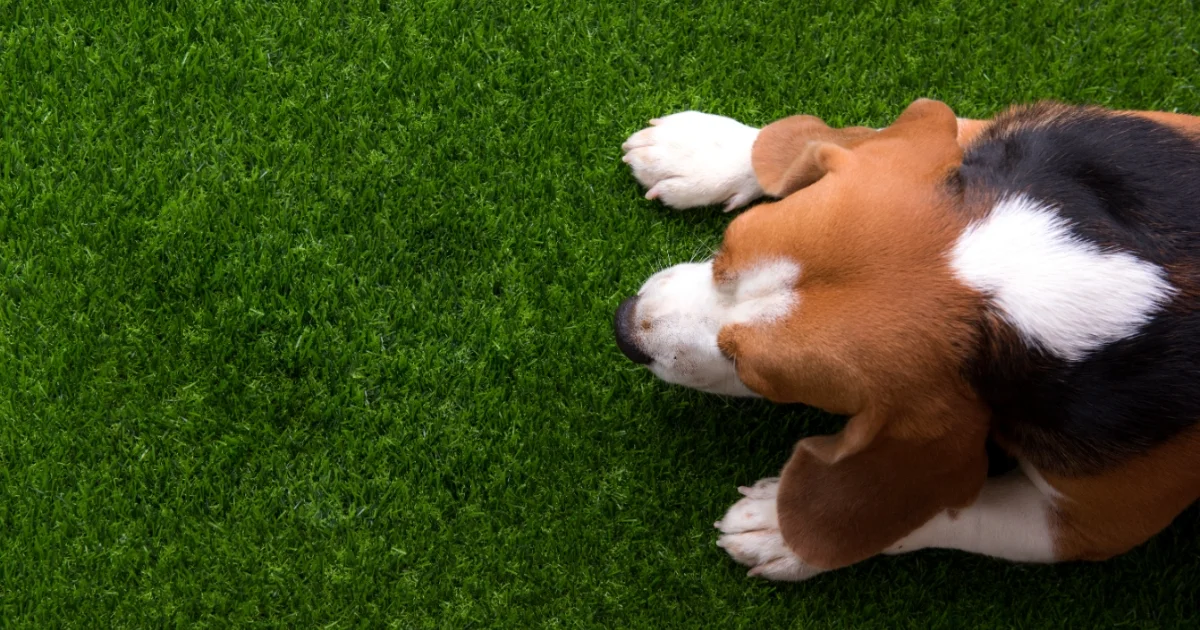
Our synthetic grass is pet-friendly. Your four-legged friends will find it exceptionally comfortable, and you need not worry about safety issues.
Plus, water and a light detergent are all you need to clean most synthetic grasses if your pet uses it as their personal restroom.
Let’s compare what’s detailed in the above two paragraphs to what pets can do to natural lawns.
First and foremost, yours wouldn’t be the only dog who loves to dig up the grass lawns or damage it during playtime. The nitrogen in a pup’s urine can kill grass over time, and your beloved furball has a strong potential to create brown spots.
The associated expenses here link back to what we’ve discussed about lawn maintenance.
You might have to do the repair work yourself, which costs you precious time you could otherwise spend doing something far more fulfilling and enjoyable.
Alternatively, you could pay a lawn care professional, which, as highlighted in the previous section, can cost nearly $500 on average.
Or, you can eliminate the need for these pesky expenses by installing a synthetic lawn for your pet to enjoy with impunity.
Resisting Mold Growth
Mold, mildew, and other forms of disease growth are frequent pitfalls of owning natural grass.
The initial issue with lawn fungus is the health hazard component. Mold, mildew, and any other disease must be treated ASAP to prevent adverse consequences for anybody who may use it, whether you, your children/grandchildren, or your pets.
Once more, we ran into the roadblock of DIY. You don’t want to spend hours trying to eliminate a given fungus.
It’ll also cost a few hundred dollars for a professional to apply the fungicide.
Synthetic grass is nowhere near as vulnerable to fungal growth as natural lawns due to its quick drainage ability (especially with our proprietary high-drainage technology), even in wet and shady conditions.
Aesthetics You Can Count On
Natural grass is vulnerable to various stressors, including excess cold, heat, and nutrition deficiencies.
The result? You end up with a brown or yellow-coloured lawn unless you shell out the small fortune required (or spend hours upon hours) restoring its lush appearance.
These aren’t concerns with high-quality synthetic grasses.
The colour of the product you purchase and install will remain, as it’s not vulnerable to the same stressors as natural grass.
Another issue you’re wise to worry about is the effect of UV rays on synthetic lawns.
All high-quality offerings are UV-stabilized, ensuring the sun won’t bleach the turf and its colour will stay robust and vibrant.
Customize to Your Tastes Without Ongoing Costs
Synthetic turfs aren’t one-type-fits-all. You’re not beholden to one choice when you switch from natural lawns to artificial ones.
Instead, you have your pick of lengths, densities, textures, and colours. Thus, you’ll enjoy a synthetic lawn that complements your property and suits your tastes.
While natural lawns offer much in the way of aesthetics, the amount of work and ongoing costs required are a significant deterrent.
You must spend hours every week pruning, mowing, weeding, and a multitude of other tasks to ensure your natural lawns reflect your aesthetic tastes or spend a fortune every spring, summer, and autumn for landscaping services.
Synthetic lawns give you the aesthetics you want without the additional legwork or ongoing costs.
The Final Decision
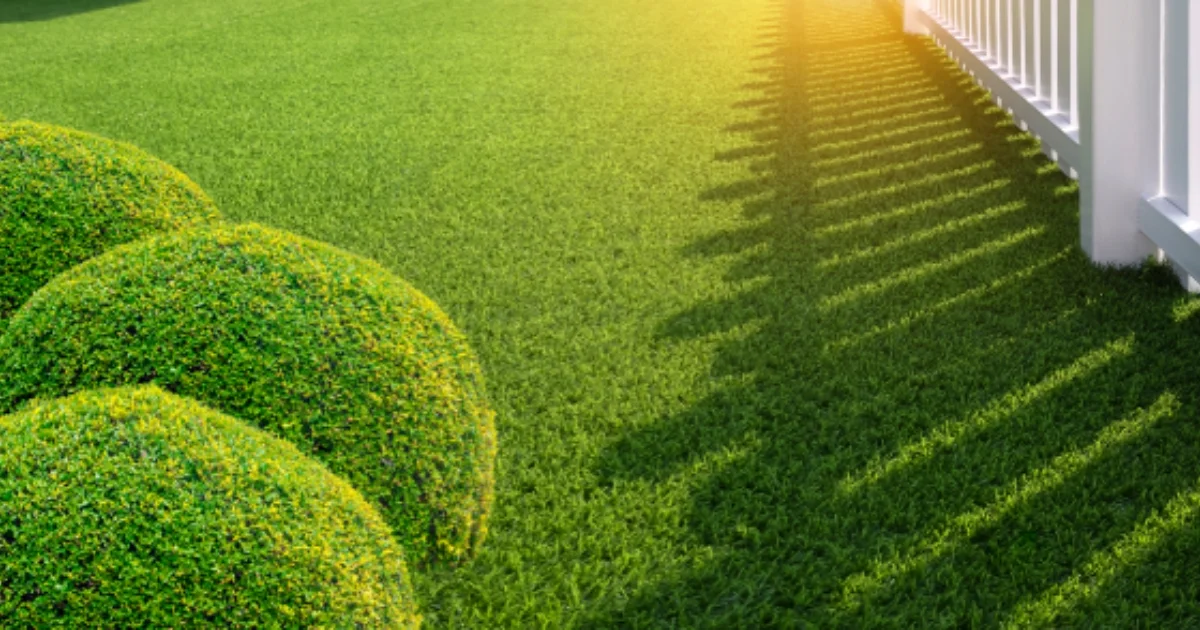
Anybody who is strongly considering a synthetic turf installation will notice how the benefits and ongoing savings more than justify the upfront costs. You’ll barely need to lift a finger to maintain synthetic grass, nor will you need to shell out thousands of dollars for landscaping services.
Now, you have all the facts to make an informed decision. If you’re sick of your natural lawn, synthetic grass is a suitable, cost-efficient, and aesthetically pleasing replacement.
Contact us today to learn more about what synthetic lawns can do for your home and quality of life.
We look forward to hearing from you!